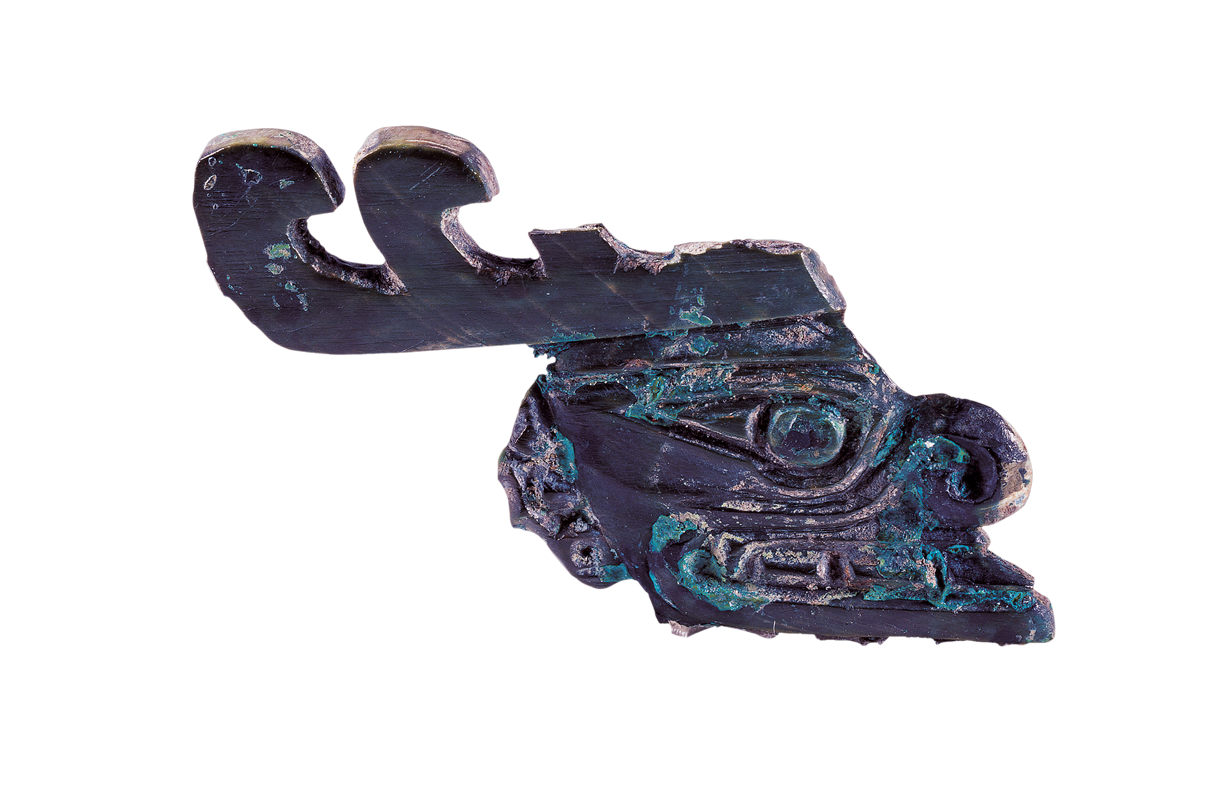
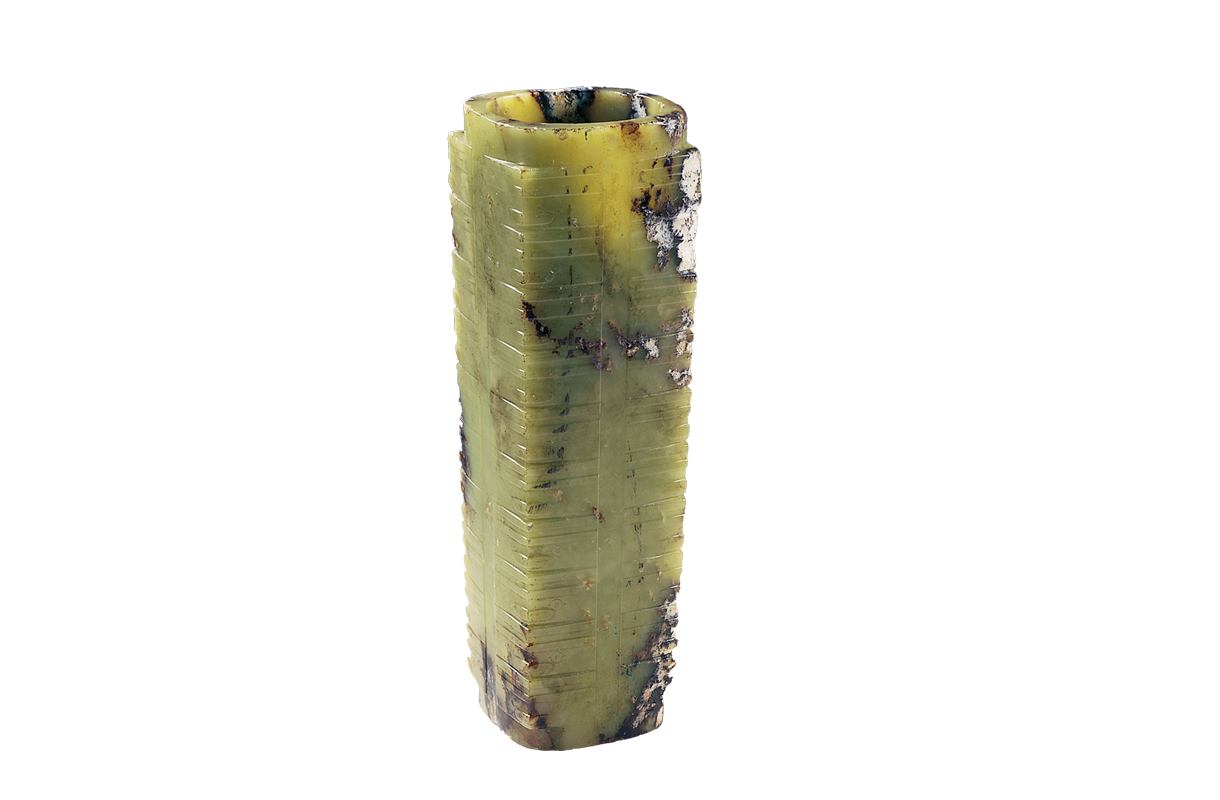
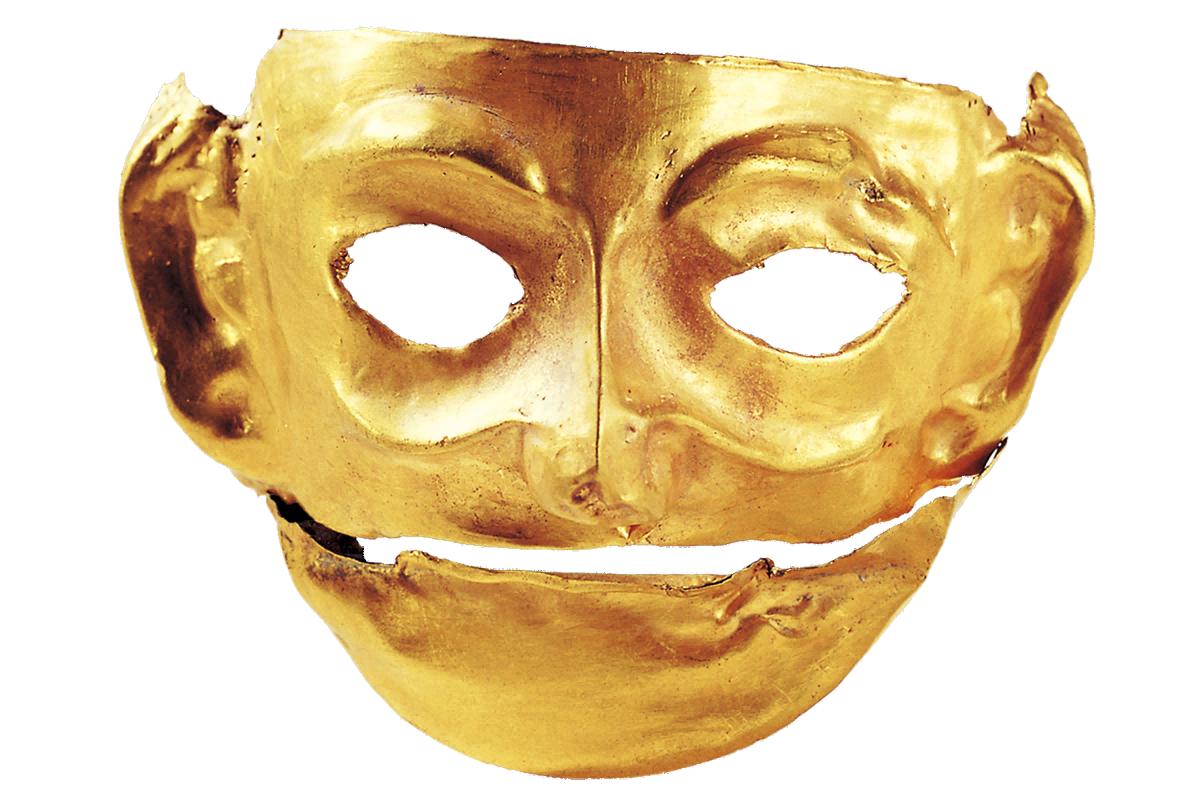
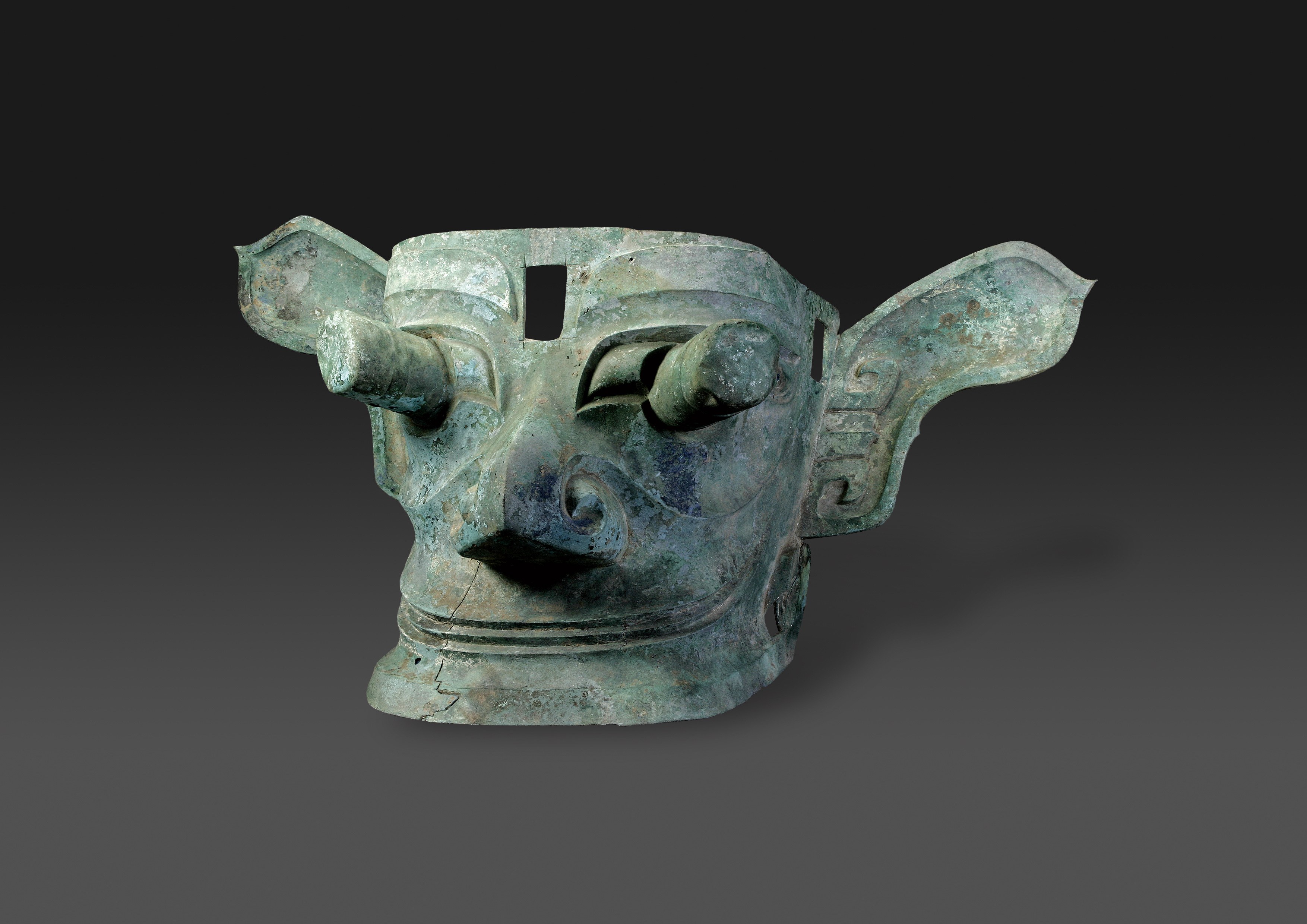
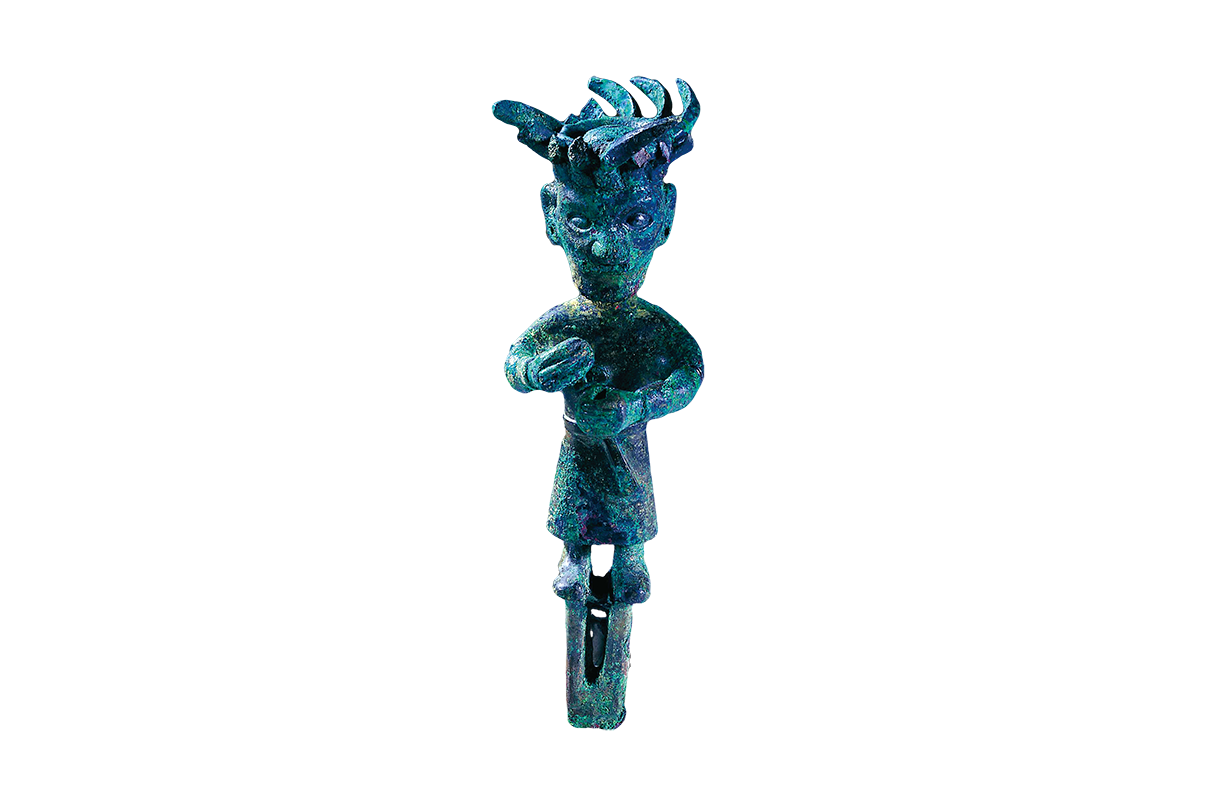
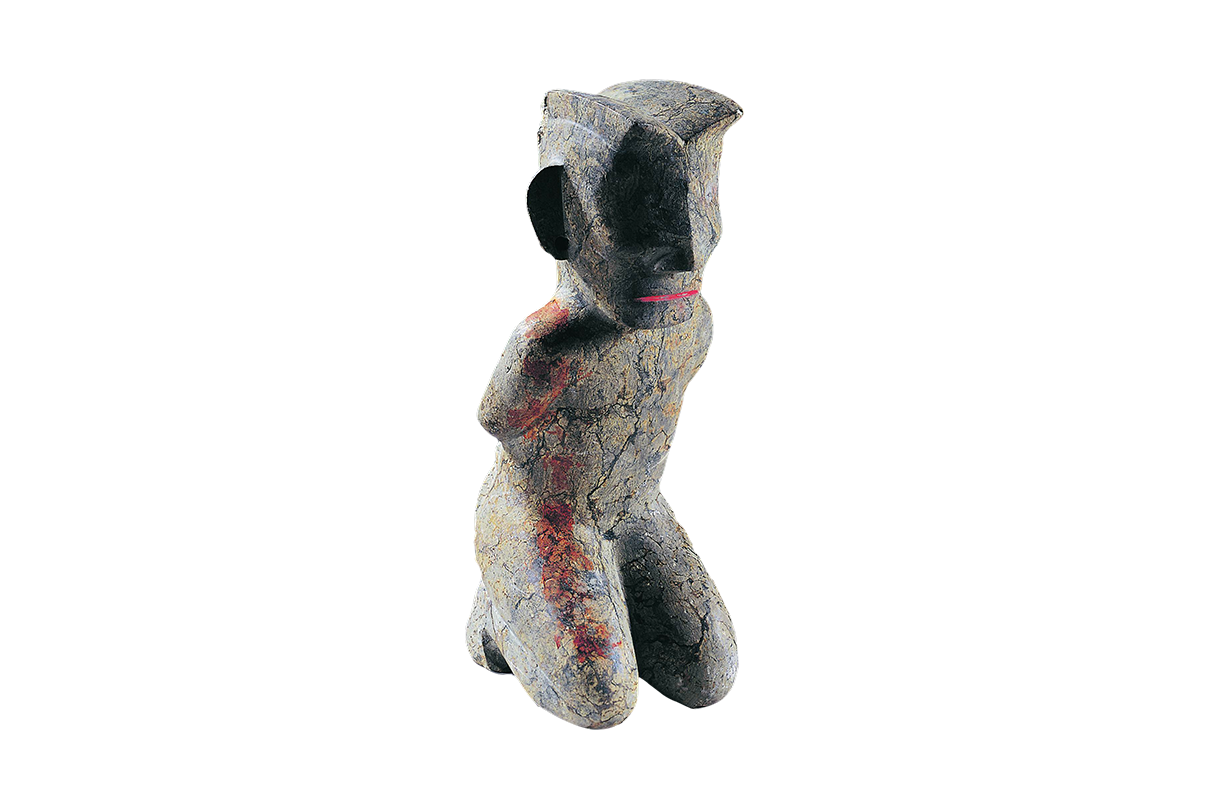
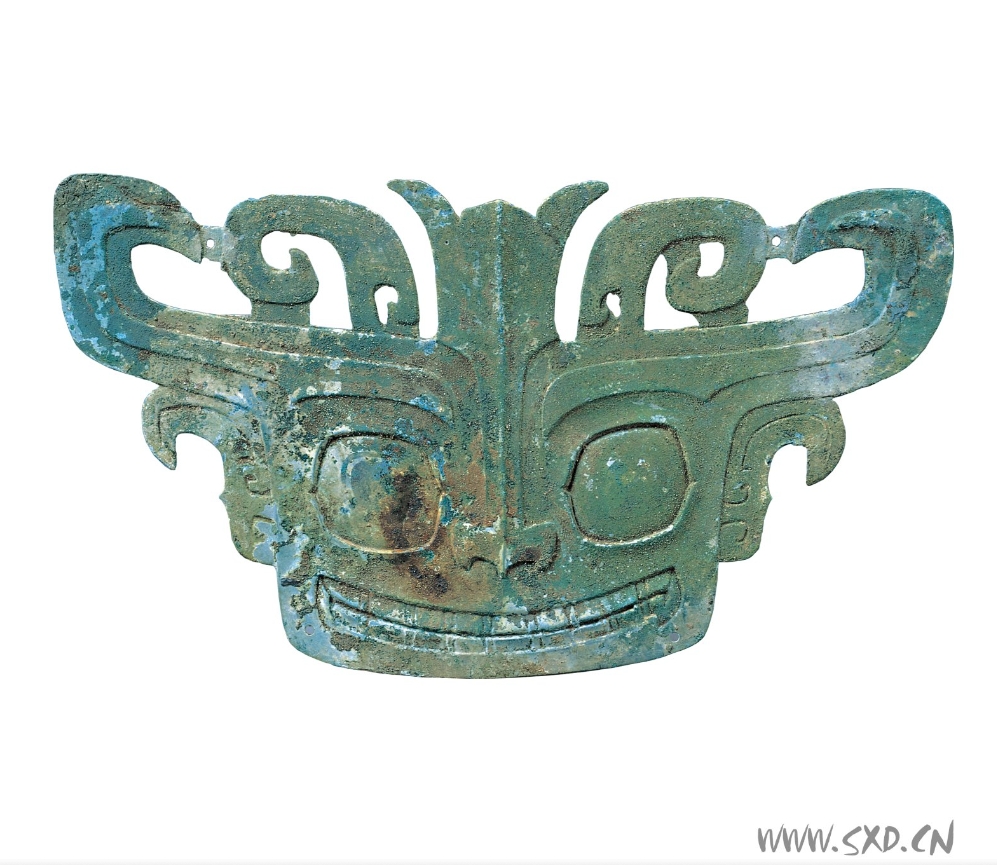
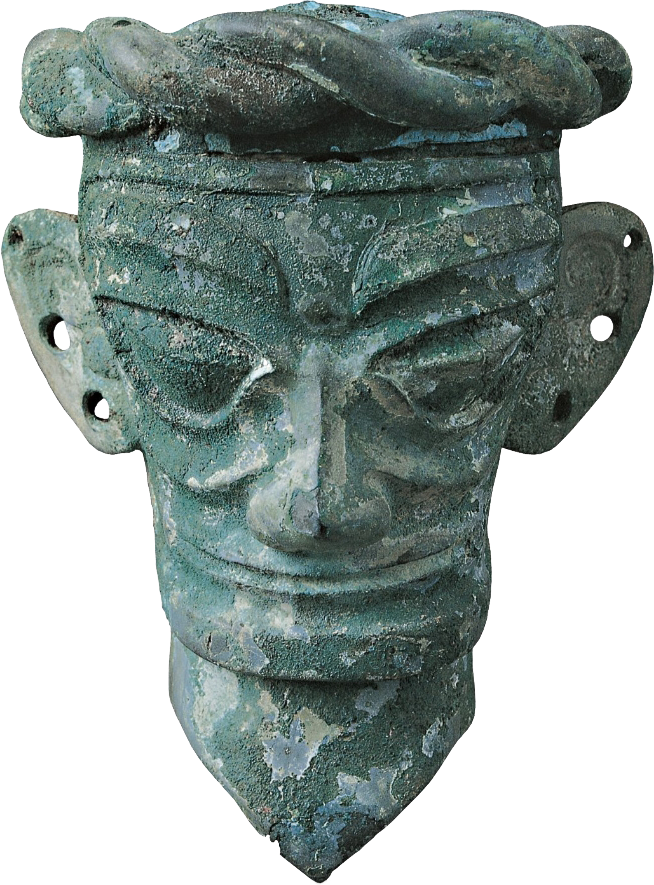
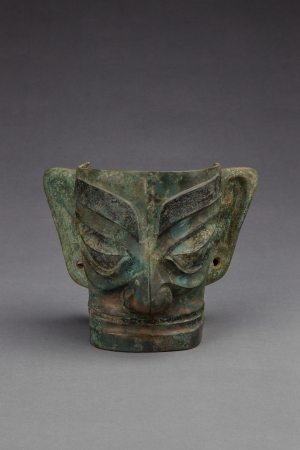
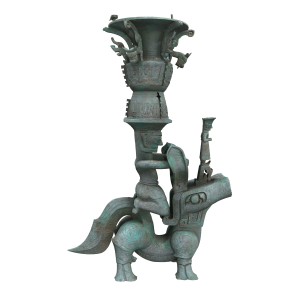
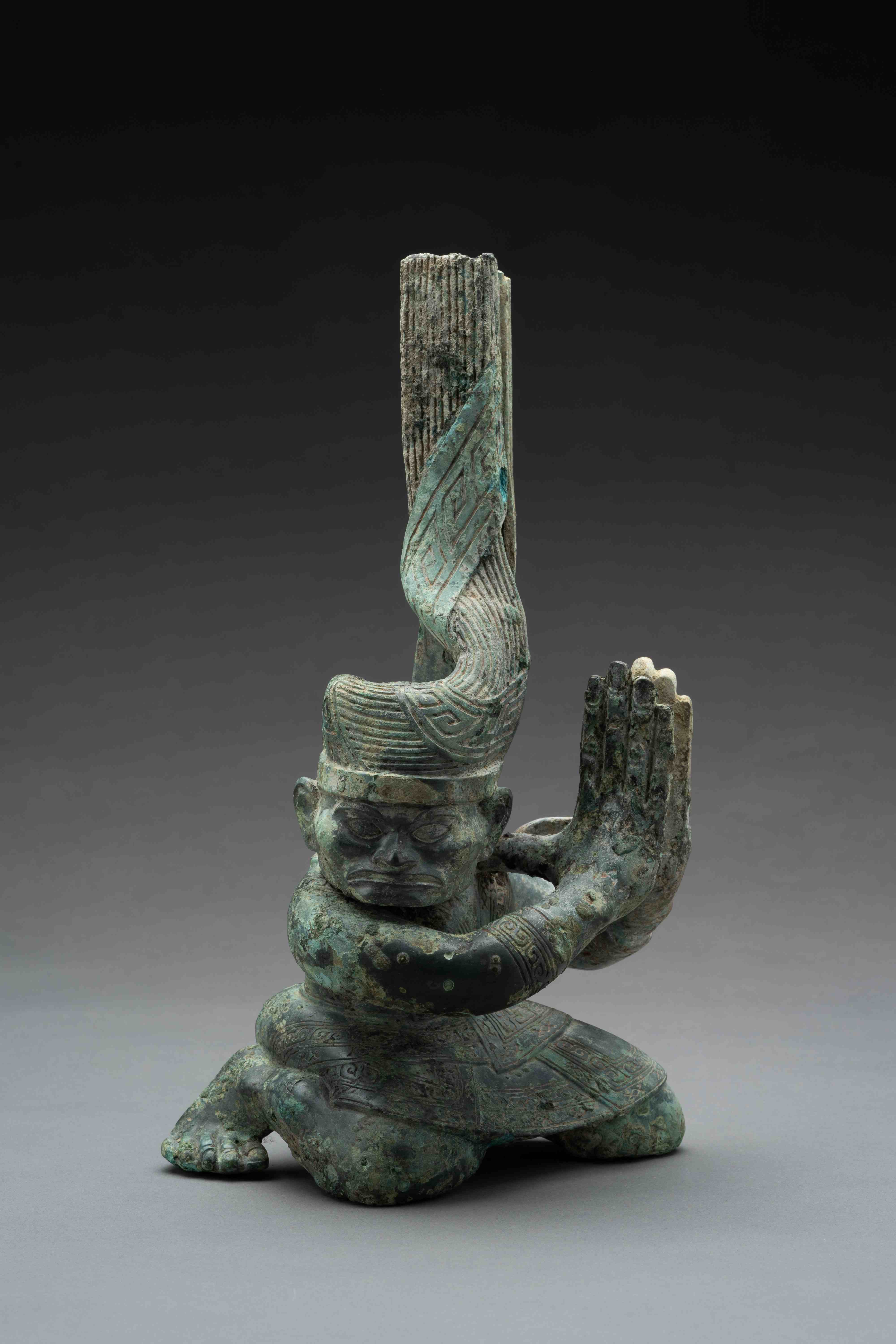
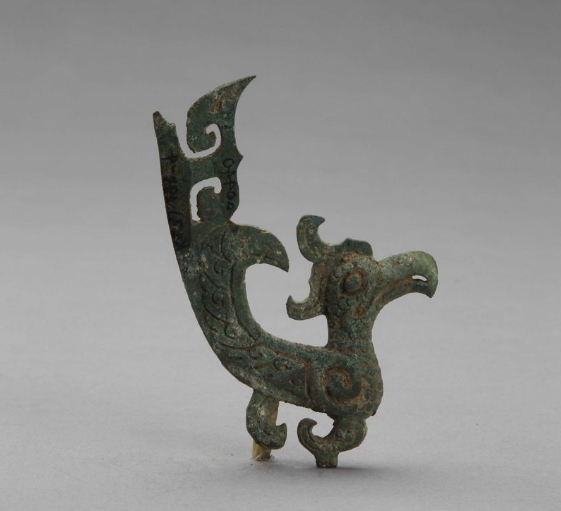
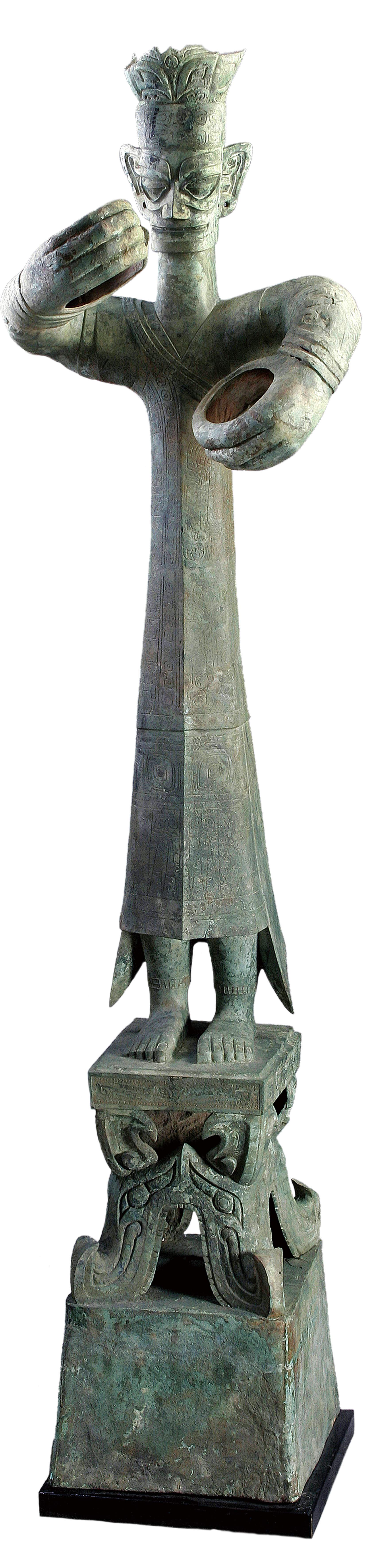
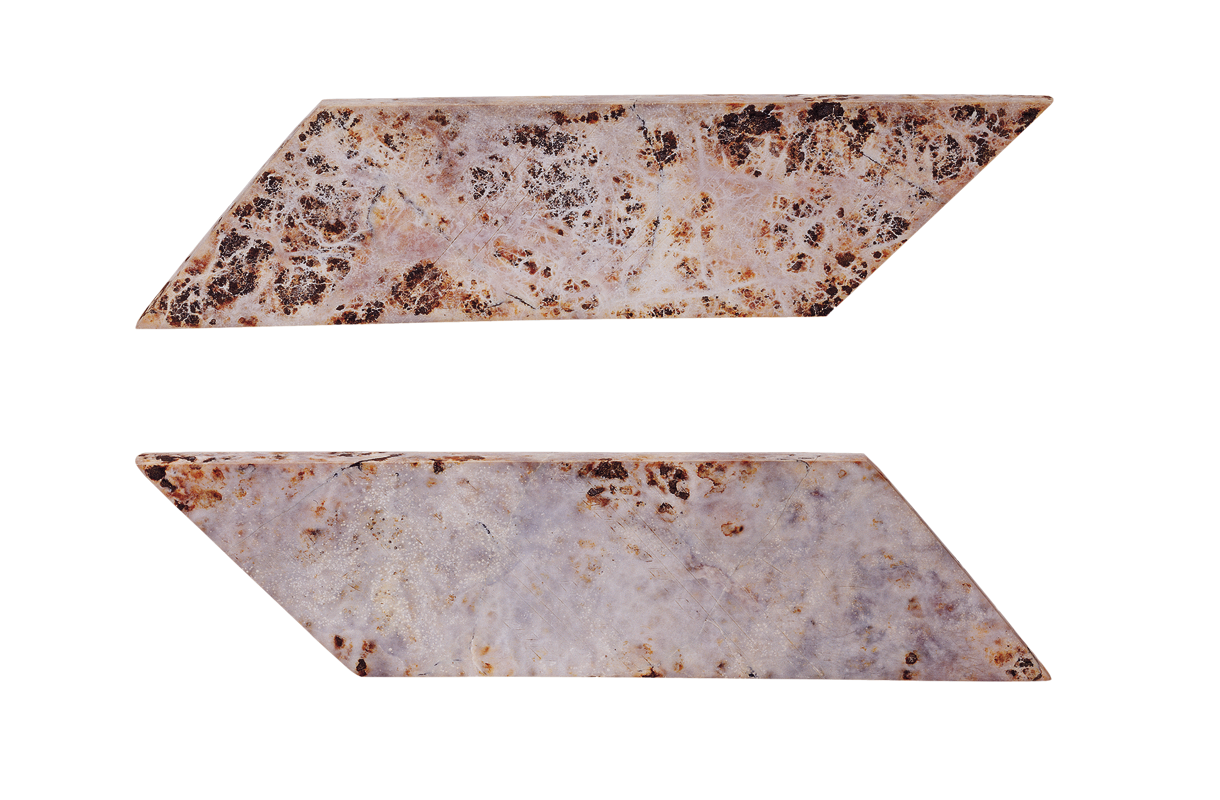
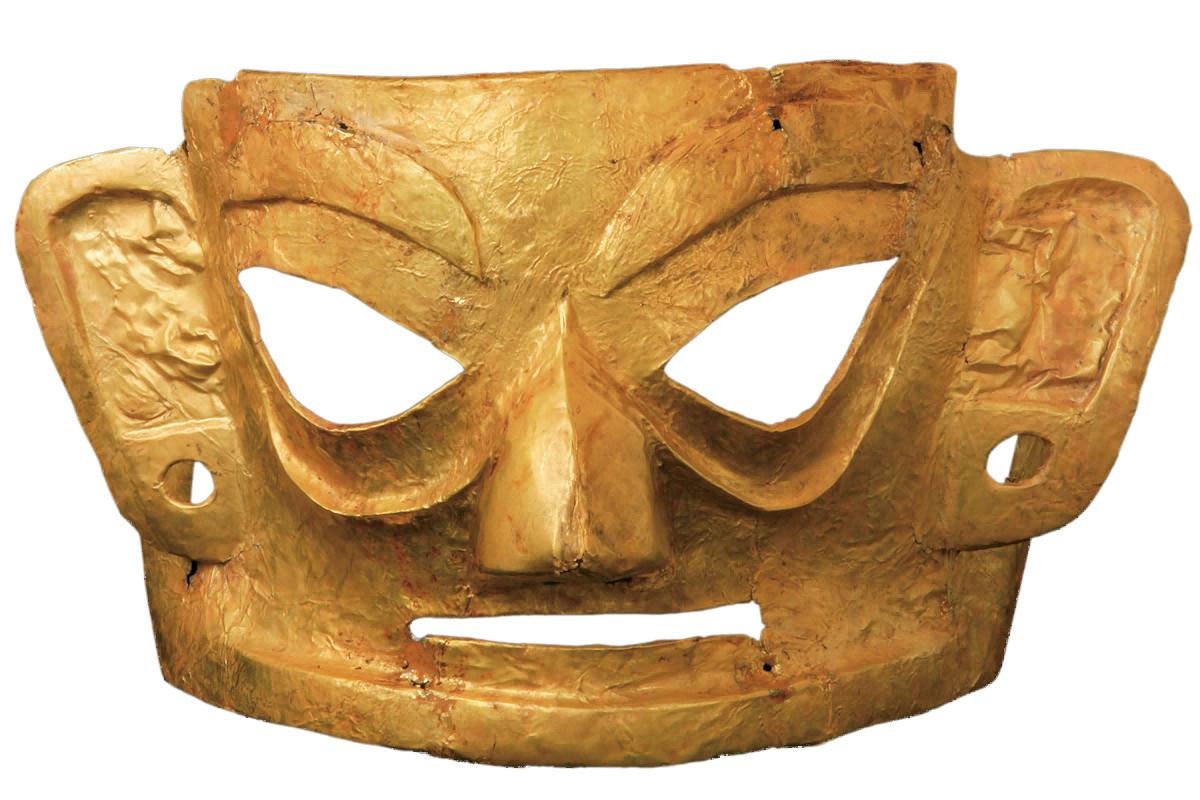
The belief world of the ancient Shu people was characterized by a multifaceted dialogue between humans and deities. They held that these realms were not irrevocably separated, but could commute through the mediation of shamans (wu and xi), ultimately achieving a unity between humans and deities. The sculptures and ritual objects from Sanxingdui and Jinsha offer a vivid material testament to this worldview. The bronze standing figure represents the shaman bridging with heaven and earth, the bronze masks give concrete form to deities and ancestors, and the gold scepter and gold masks serve as the insignia through which shamans exercise divine authority. From the bronze mask with protruding eyes at Sanxingdui to the gold masks at Jinsha, and from the bronze human heads to the stone kneeling figurines, the ancient Shu people employed these formal distinctions to delineate the identities of human, shaman, and deity through the contrasts in the sculptures, yet bound these three realms together through sacrificial rituals. Positioned at the very nexus of politics and ceremony, the shaman functioned as the essential mediating link. Under their auspices, the ancient Shu belief system coalesced into an integrated whole, a world where royal power intertwined with theocratic authority, where humankind stood in dialogue with nature, and where mortals reached across the threshold to the spirits.