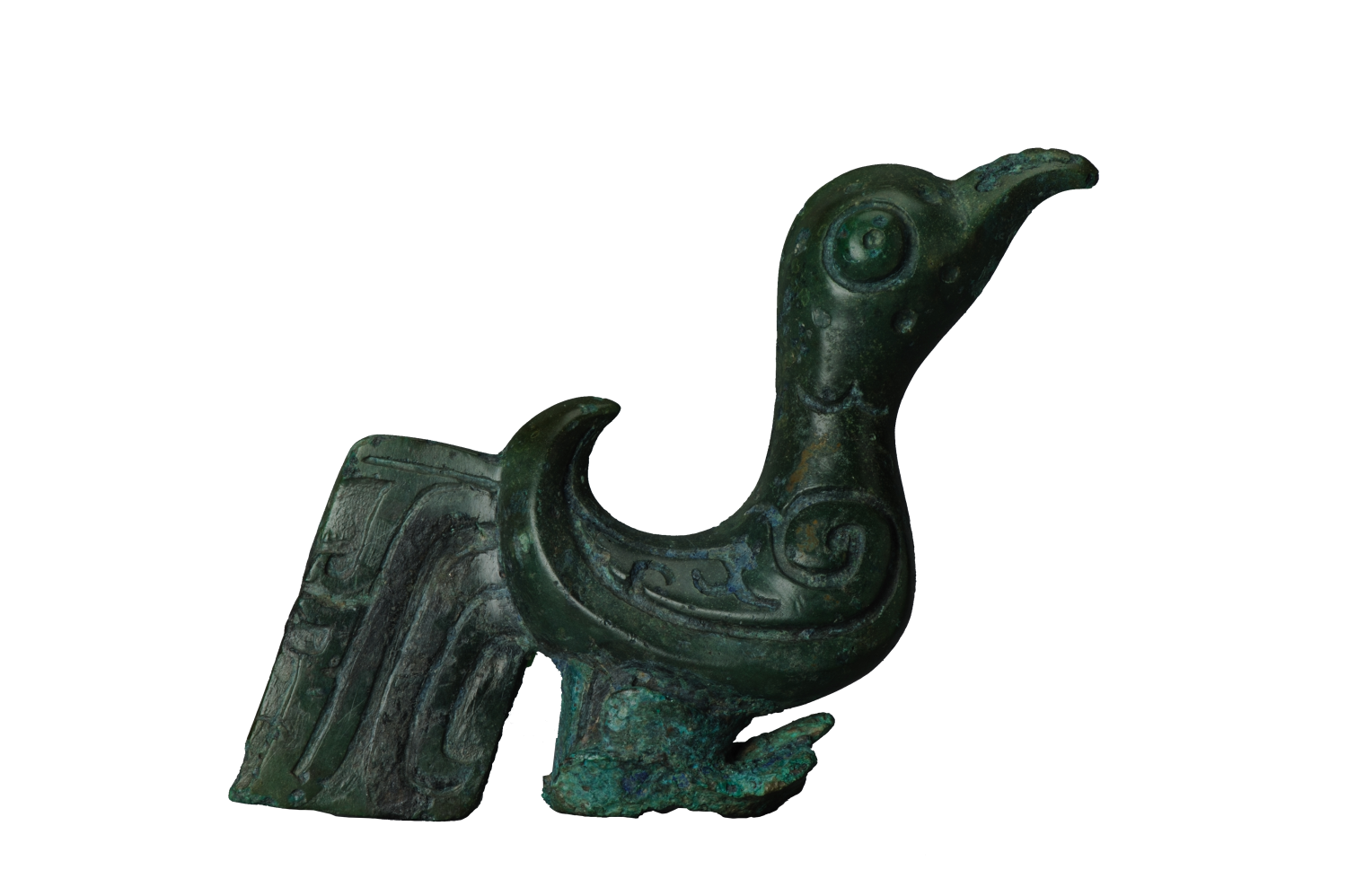
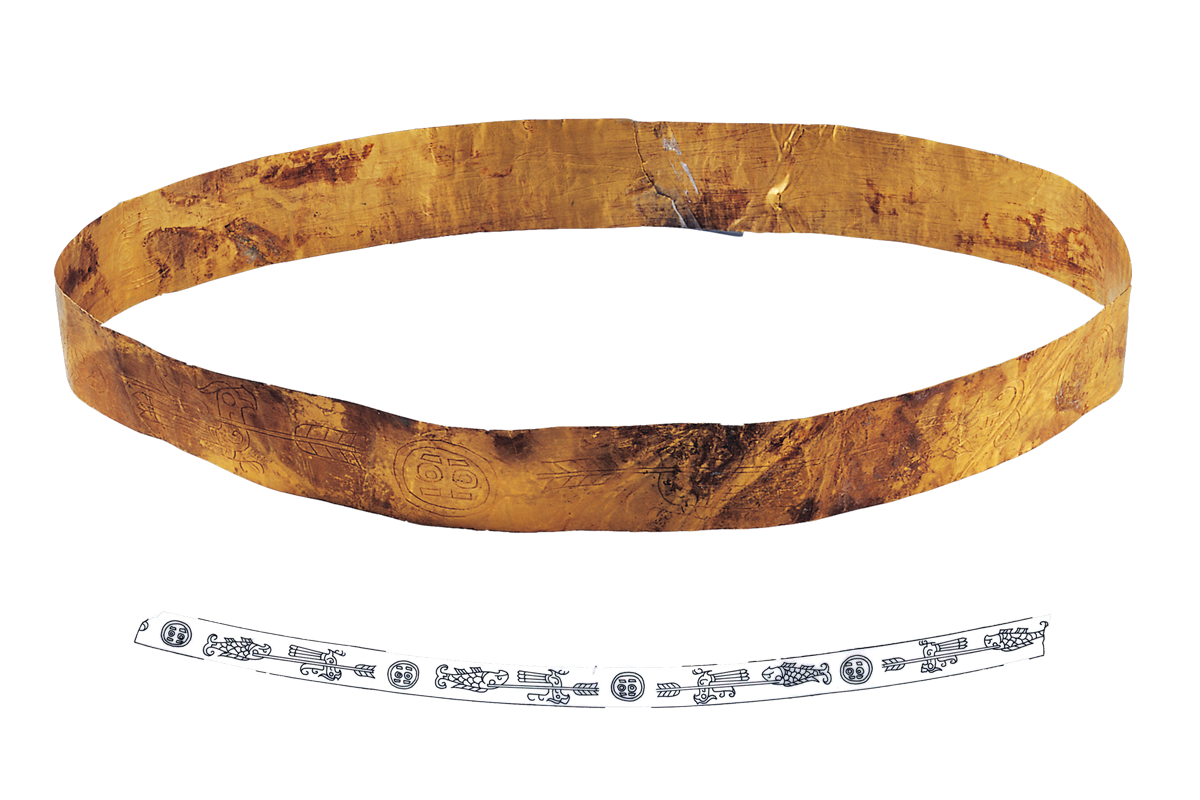
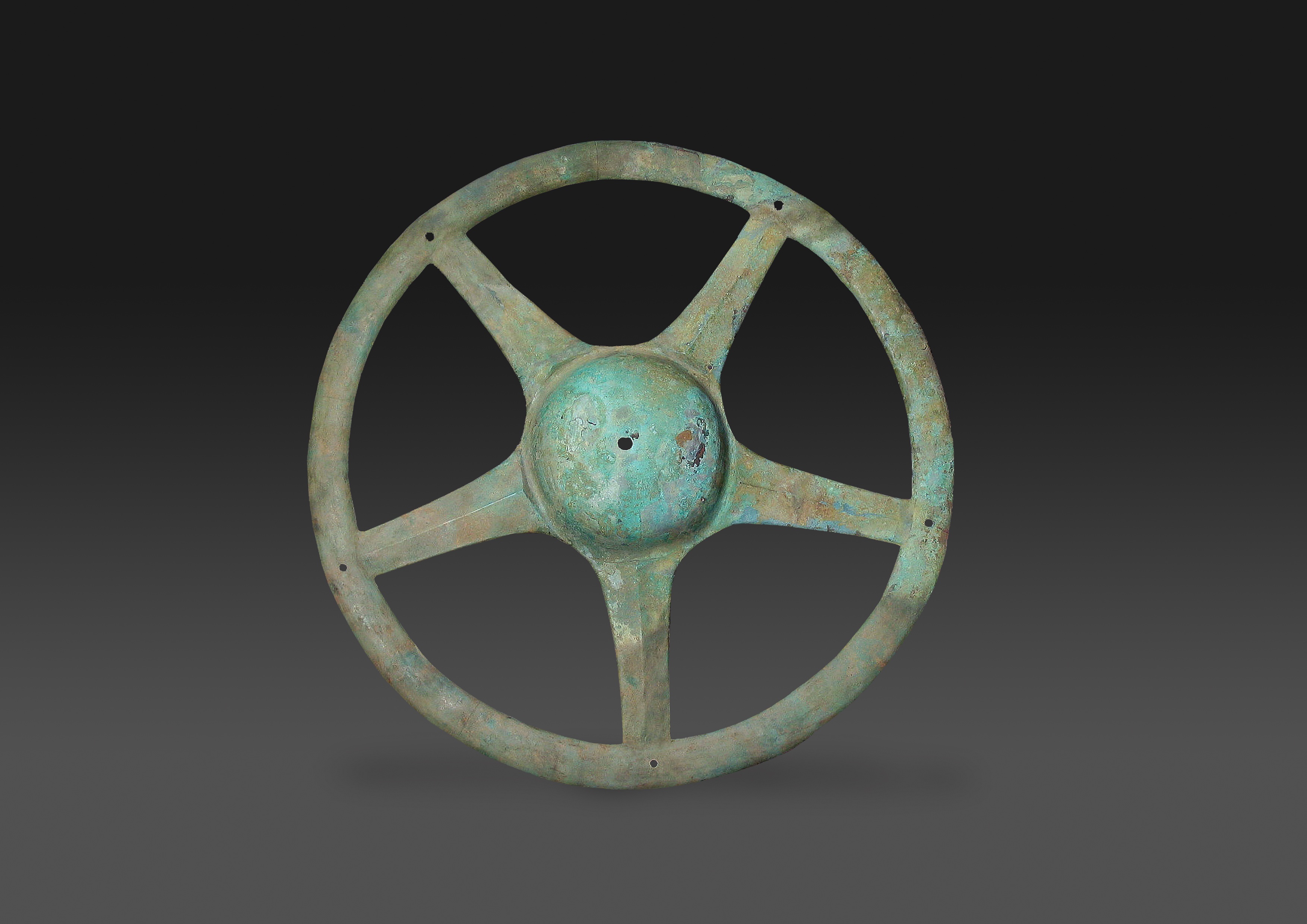
Sanxingdui and Jinsha form the core site complex of an early regional state—the ancient Shu kingdom—established by its people on the Chengdu Plain. Together, they represent the pinnacle of the Bronze Age achievement in the upper Yangtze River region of China, serving as tangible testament to the historical accounts of the ancient Shu kingdom in Chinese records. Spanning thousands of years, the ancient Shu civilization has left behind a remarkable array of precious artifacts, including gold, bronze, jade, stone, and ivory. These relics illuminate a society with distinct theocratic beliefs, profound cosmological views, masterful craftmanship, and the evolving trajectory of its social development.
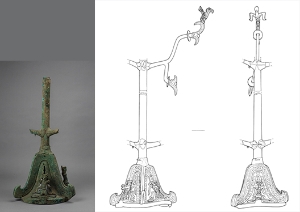
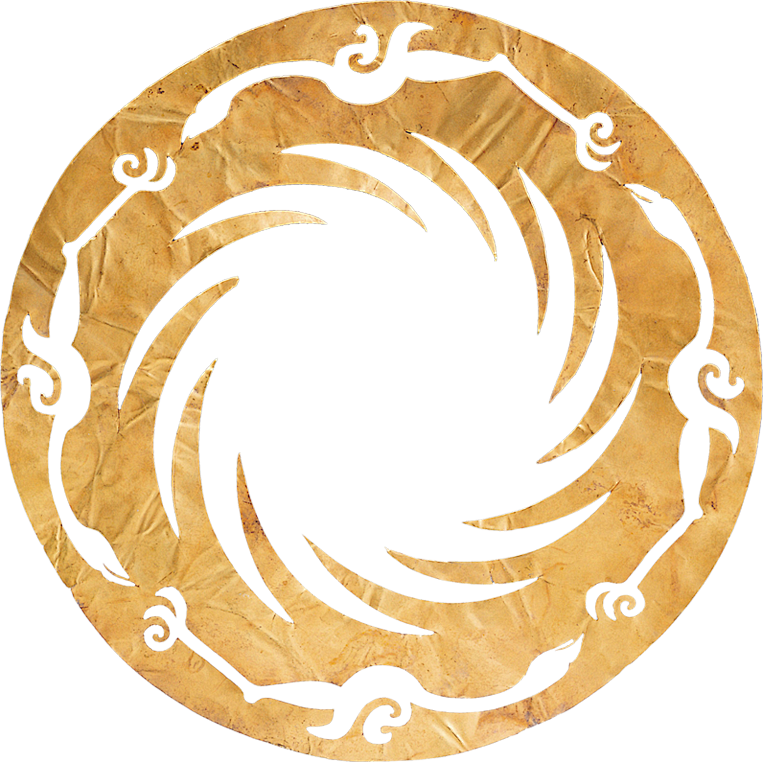
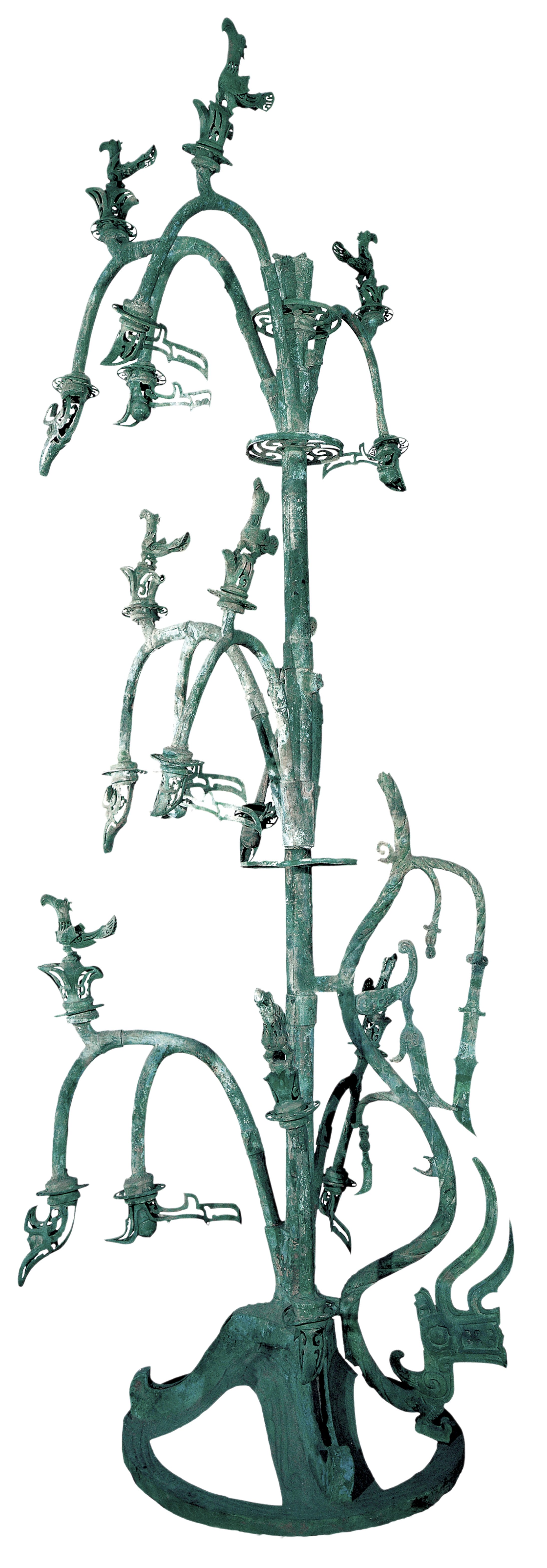
In ancient Chinese mythology, the Golden Crow carries the sun on its back. The ancient Shu people gave tangible form to this romantic imagination of the sun and the cosmos, casting bronze sacred trees and solar totems that encode their understanding of cosmic orders, thus yielding a distinctive expression of cosmic view. The bronze sacred tree of Sanxingdui rises to a height of nearly four meters. Adorned with lush branches, perched golden crows, and winding dragons and snakes, it was regarded by the ancient Shu people as the “axis of the universe” connecting heaven, earth, and humanity. At Jinsha, the Sun and Immortal Birds Gold Ornament tells a complementary story. With its twelve radiant solar rays and four soaring birds, it perfectly distills the ancient Shu people’s understanding of the solar cycle and the rhythm of the turning seasons. From Sanxingdui to Jinsha, the sacred tree and sun totem share a single spiritual lineage. More than mere artifacts, they are projections of the ancient Shu people’s cosmic understanding, reflecting the reverence and exploration of natural forces by the early inhabitants of the upper Yangtze River region.